

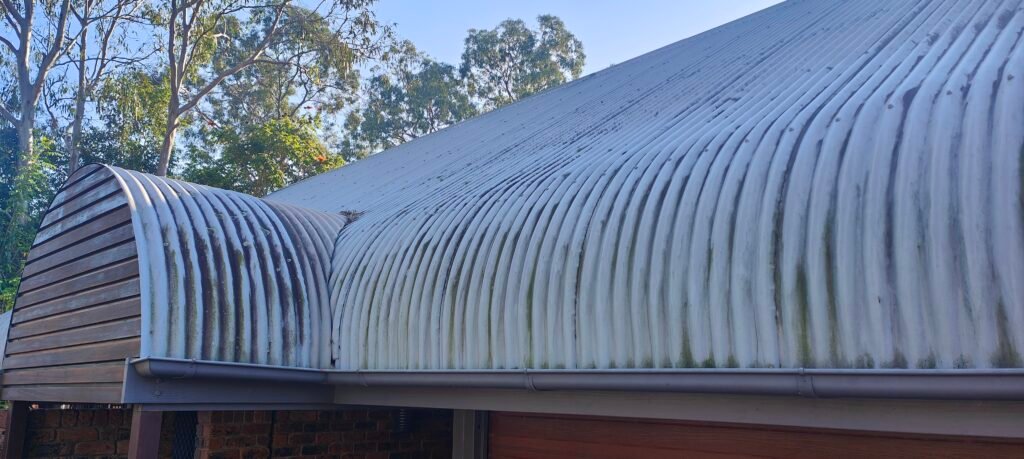
Roof Cleaning in Brisbane: Why Soft Washing Is the Safest Method
Your roof is your home's first line of defence against Brisbane's subtropical elements. But many homeowners unknowingly cause more damage during cleaning than the weather ever could — high-pressure washing can strip your roof's protective coatings, force water into your home, and lead to costly repairs.
Here's why soft washing has become the preferred method for Brisbane roof cleaning, and how it protects your investment while eliminating mould, algae, and moss.
Why Brisbane Roofs Need Special Attention
Brisbane's climate creates ideal conditions for roof problems — high humidity, intense rainfall, and abundant sunshine all encourage organic growth that can compromise your roof's integrity over time.
- High humidity — creates persistent moisture that encourages mould and algae growth
- Summer storms — heavy rainfall drives organic matter into tile pores and crevices
- UV exposure — intense sunlight breaks down roofing materials over time
- Temperature swings — expansion and contraction can weaken roof structures
The Hidden Dangers of Pressure Washing Roofs
More pressure doesn't mean better cleaning — on a roof, it usually means damage.
Surface Damage to Roof Tiles
High-pressure water strips away the protective granular coating on concrete tiles, making them more porous and susceptible to water absorption over time.
Water Infiltration
Pressure washing can force water underneath tiles, through mortar joints, and past flashings — leading to rotten battens, mould in roof cavities, and compromised insulation that often goes undetected until it's a real problem.
Structural Stress
Intense pressure can crack terracotta tiles, displace metal roof sheeting, and weaken the roof structure — and can void manufacturer warranties in the process.
Moss and Algae Regrowth
Pressure washing only removes surface growth while leaving root systems intact, so regrowth tends to happen faster and more aggressively than with a proper treatment.
What Is Soft Washing and How Does It Work?
Soft washing uses low-pressure water — similar to a garden hose — combined with specialised, biodegradable cleaning solutions that treat organic growth at the source rather than just blasting the surface.
- Low-pressure application — gentle enough to protect your roof's coating
- Specialised solutions — break down and treat root systems, not just surface growth
- Dwell time — solutions are given time to properly work into the surface
- Gentle rinse — removes dead organic matter without damaging the roof
This approach provides longer-lasting protection than pressure washing alone.
Brisbane Roof Types and Their Specific Needs
Concrete Tile Roofs
The most common roofing material in Brisbane — porous and vulnerable to pressure damage, so gentle cleaning that preserves the protective coating is essential.
Terracotta Tile Roofs
Beautiful but fragile — can crack under high pressure. Soft washing solutions penetrate the surface to treat growth without compromising tile integrity.
Metal Roofs (Colorbond)
Can withstand more pressure, but the painted surface and protective coating can still be damaged by aggressive cleaning. Soft washing Colorbond roofs preserves the coating while removing black mould streaks.
Decramastic Tile Roofs
Stone-coated steel tiles with underlying metal susceptible to rust if the protective coating is damaged — soft washing cleans thoroughly without compromising that protection.
Our Roof Cleaning Process
- Comprehensive assessment — we check your roof's condition, material, and specific growth patterns
- Property protection — garden, windows, and surrounding surfaces are protected from runoff
- Apply cleaning solutions — eco-friendly solutions applied at the right concentration for your roof type
- Controlled dwell time — solutions are given time to penetrate and treat organic growth
- Gentle low-pressure rinse — dead organic matter and residue washed away, garden-hose pressure
- Final inspection — we check the results and give you maintenance recommendations
Common Roof Problems in Brisbane Homes
Black Mould and Algae
Dark streaks that retain moisture against the roof surface, accelerating deterioration if left untreated. See our mould and algae removal guide for more on treating this properly.
Lichen and Moss
Can lift tiles, trap moisture, and create entry points for water — their root-like structures need proper treatment, not just a surface clean.
Dirt and Debris Accumulation
Leaves, dust, and pollution build up in valleys and gutters, creating a nutrient-rich environment for further growth.
Efflorescence
White mineral deposits on concrete and terracotta tiles, indicating moisture movement through the material.
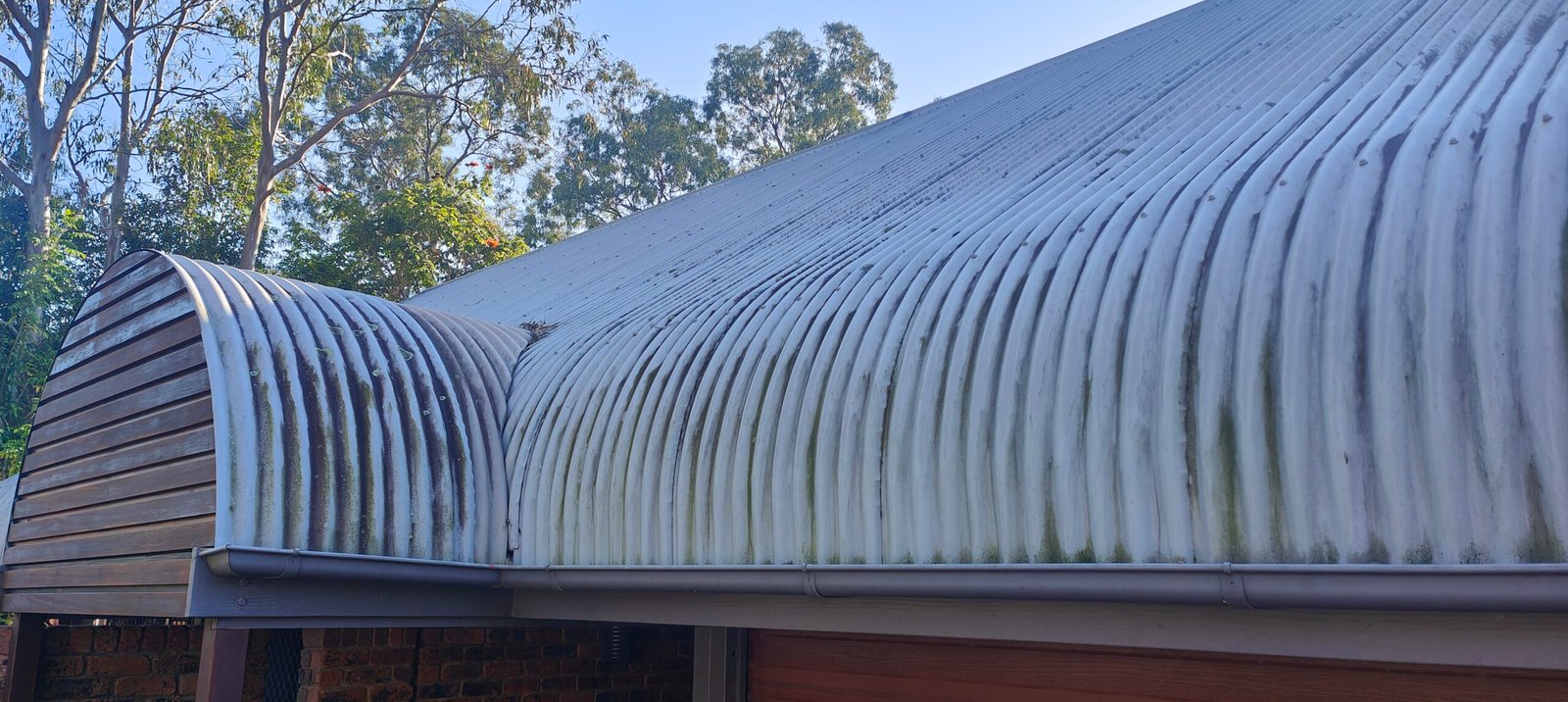
Before
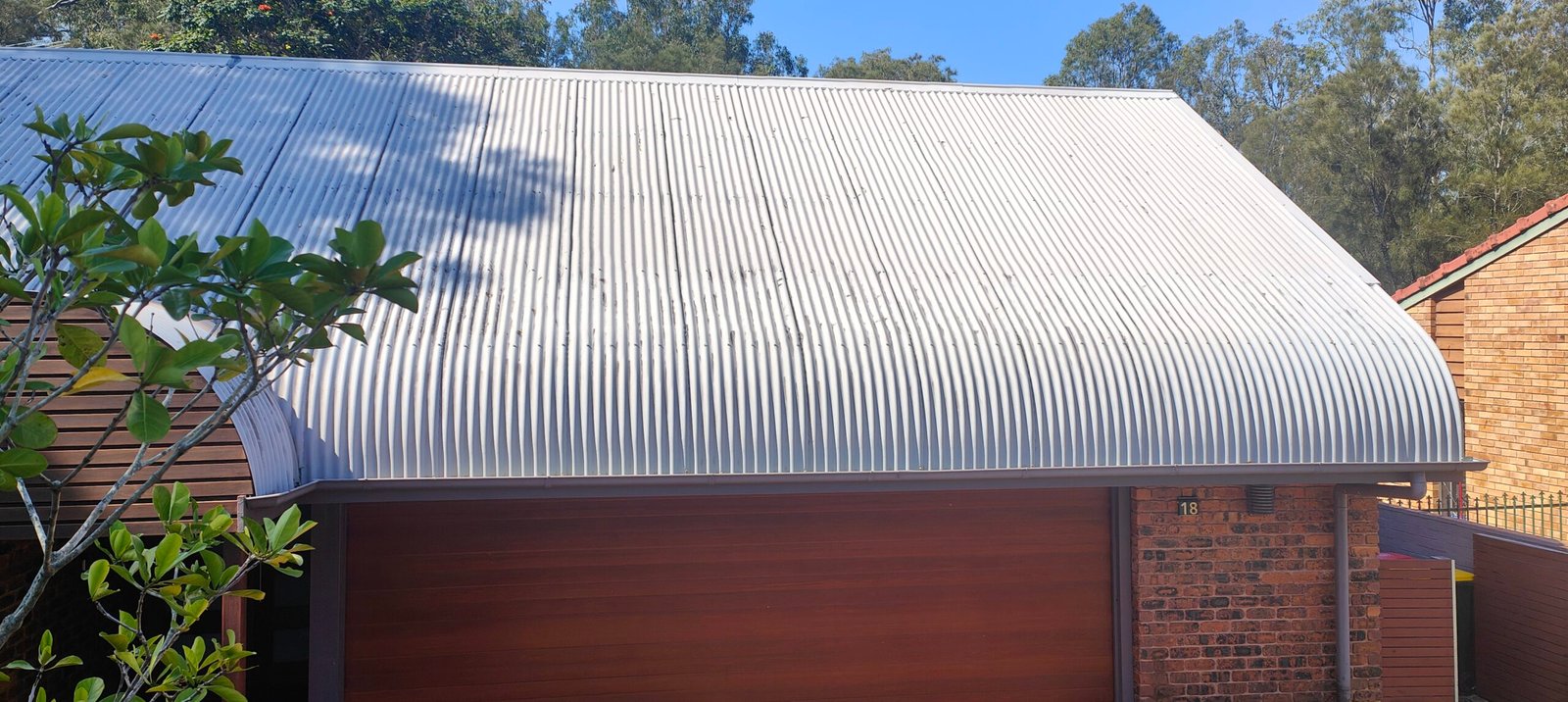
After
DIY Roof Cleaning vs Professional Soft Washing
DIY risks: fall hazards without proper equipment, incorrect chemical concentrations that can damage roofing or landscaping, superficial results without commercial-grade equipment, and potentially voided warranties from improper cleaning methods.
Professional advantages: proper safety protocols and insurance, understanding of different roofing materials, commercial-grade solutions and equipment, and the ability to catch potential issues before they become bigger problems.
What It Costs
Roof size, pitch, material, and how much growth needs treating all affect the price — so rather than guess at a number that might not match your roof, we'd rather just give you a straight answer.
Get a free, no-obligation quote and we'll give you a clear price for your specific roof.
How Often Should You Clean Your Brisbane Roof?
Most Brisbane roofs benefit from professional soft washing every 24–36 months. Homes under heavy tree cover or in particularly humid microclimates may need more frequent attention. Worth booking in before selling, after major storms, or when visible growth appears.
Signs your roof needs cleaning:
- Black or green streaks on north-facing roof surfaces
- Visible moss or lichen in valleys and shaded areas
- Granules building up in gutters or downpipes
- Reduced rainwater flow from roof surfaces
FAQs
Is soft washing safe for my Colorbond roof?
Yes, when performed by professionals using the right solutions and techniques — it removes black mould streaks without damaging the protective coating.
How long does roof cleaning take?
Most residential roofs take 2–4 hours, depending on size, contamination level, and accessibility.
Will soft washing treat the roots of moss and algae?
Yes — the solutions penetrate porous surfaces to treat organic growth at the source, which helps slow down how quickly it comes back compared to a surface clean alone.
Is the process safe for my garden?
Yes — we use plant-safe, biodegradable solutions and take care to protect your landscaping throughout the clean.
Can soft washing prevent future mould growth?
No method can permanently prevent organic growth in Brisbane's climate, but soft washing provides longer-lasting results by treating the root system rather than just the surface.
Should I clean my roof before replacing it?
Generally no — roof cleaning is a maintenance procedure for sound roofs. If yours needs replacement, cleaning is typically unnecessary.
Protect Your Roof Investment
Your roof is one of your home's most significant investments — the right cleaning method protects it, rather than risking the kind of damage that leads to costly repairs.
At FRSH Again, we use soft washing because it delivers a genuinely deep clean without the risks that come with high pressure on delicate roofing materials.
Ready to protect your roof the safe way? Get a free, no-obligation quote or call 0424 803 491.